


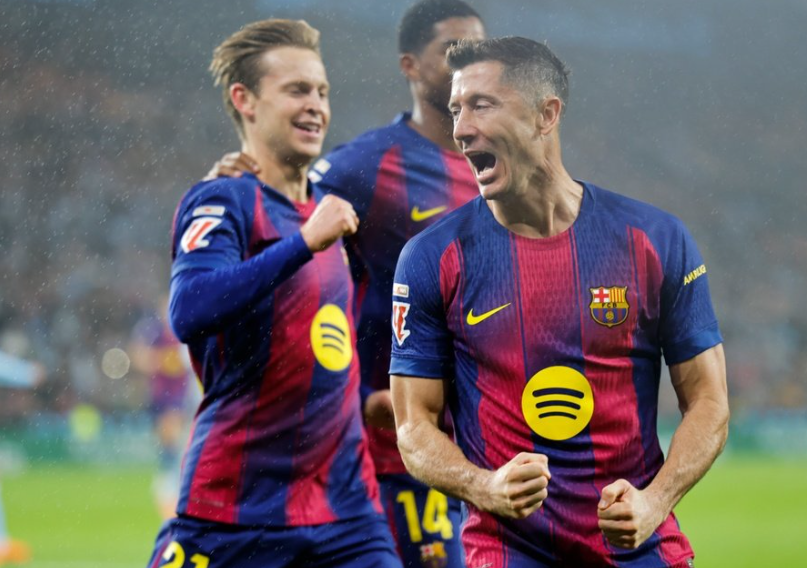
Robert Lewandowski has dropped a bombshell, revealing the club asked him to stop scoring towards the end of the 2022–23 season to avoid triggering a bonus payment owed to Bayern Munich. The revelation appears in his book “Lewandowski: The Real Story”, and if true, paints a surreal picture of a club so cash strapped it allegedly asked its star striker to ease off right after winning La Liga.
The incident reportedly came once Barcelona had mathematically sealed the title, with Lewandowski running hot in front of goal and closing in on a milestone that would activate a performance clause linked to his transfer. The striker says senior club figures, including president Joan Laporta, pulled him aside with a very blunt request: “Robert, we need you to stop scoring in the last few matches.” The Pole describes his reaction as disbelief, saying nobody had ever suggested such a thing to him in his entire career, not at Bayern, not for Poland, not in any dressing room.
The clause in question was tied directly to Bayern Munich. If Lewandowski hit more than 25 La Liga goals that season, Barcelona would have owed up to €2.5 million to the Bundesliga champions. He finished on 23, just two goals short, meaning Bayern never saw the extra cash. On paper it looks harmless: Barca got the title, Lewandowski won the Pichichi award, fans celebrated. But the financial subtext makes the story feel far murkier.
To understand why this might even happen, you need to look at Barcelona’s situation at the time. The club was fighting fires on multiple fronts: La Liga’s strict salary cap, deferred wages still owed to players from the pandemic years, transfers funded with “economic levers” that mortgaged future income, and pressure to compete for trophies while spending less than rival superclubs. Every unnecessary expense was treated like a crisis. The idea that a striker’s next goal could cost millions isn’t far-fetched under that system, but asking him not to score crosses into bizarre territory.
Context also matters with Bayern. The German champions weren’t exactly thrilled with the manner of Lewandowski’s exit, and their board repeatedly questioned how Barca could afford him despite publicly admitting they were broke. The extra clause was seen as a way to squeeze more value from the sale, so missing the target probably irritated Bayern further. What’s unclear and Lewandowski doesn’t spell it out, is whether Xavi himself was involved or whether this was handled purely by club executives trying to protect the accounts.
Sportingly, little damage was done. Lewandowski still finished top scorer in the league, helped Barcelona reclaim domestic dominance, and settled well in his first year at Camp Nou. But the story now invites a new question: was the club managing tactics based on finance, not football? Fans already suspected financial decisions influence playing time, renewals, salary cuts and even transfers. This anecdote only fuels that narrative.
It also adds intrigue to Lewandowski’s relationship with Barcelona since then. His goal numbers dipped the following year, he faced more competition for minutes, and the club continues to flirt with rebuilding their attack for the long term. Some supporters now wonder if pressure to manage contract triggers will continue, especially as Barcelona still operate with tight budget controls from La Liga.
For Lewandowski, the story seems more amusing than bitter. The tone in the book suggests he found the incident bizarre rather than insulting, almost like a strange snapshot of modern football economics. Still, for a striker built on goals, being told to slow down must’ve felt like football heresy.
In the end, Barcelona saved the €2.5m, Bayern missed out, and the title was theirs. But the revelation shines a harsh light on the financial reality behind the badge. When a club is asking its star No.9 not to score, it says just as much about the balance sheet as the football. And it leaves fans wondering: what else happens behind closed doors that we never hear about?